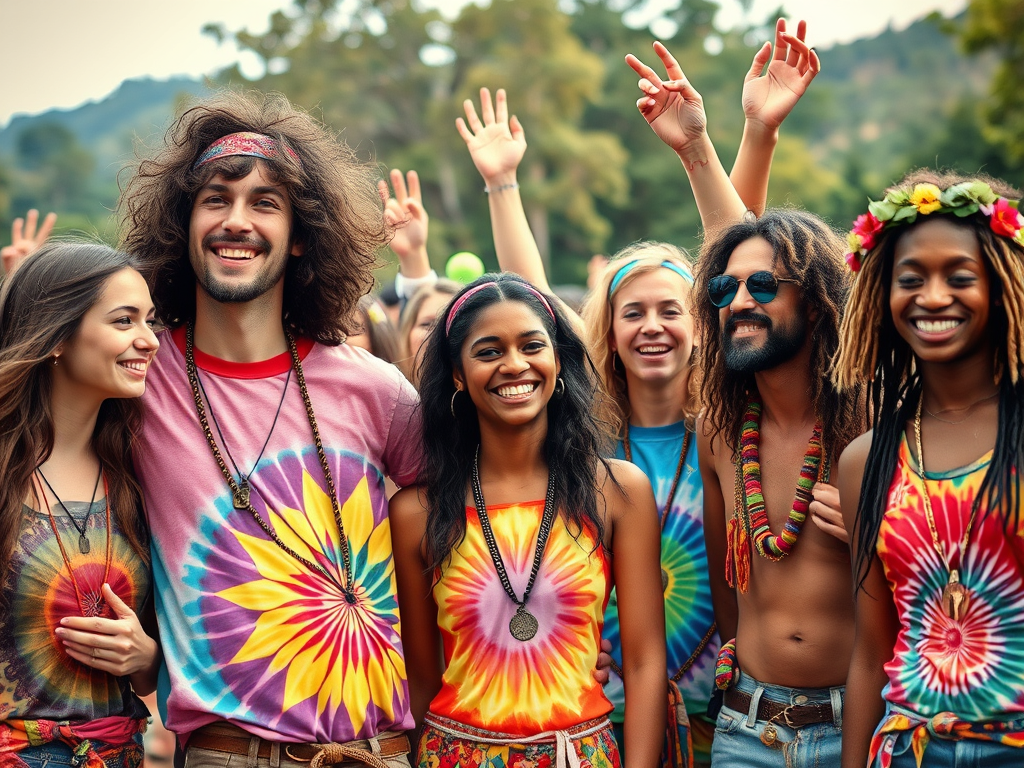
We’re having a revolution in America, although now it’s resistance and protection rather than joyous social change, like the ‘60s. In the last post I put up on this site, about the outrageous amount of corruption in San Francisco, I make the light-hearted suggestion that I need to find a partner for ArtHouse from the genuinely revolutionary era of the ‘60s. The hippie wing of Boomer culture changed things in the world forever, championing peace, love, community, freedom, experimentation, art, and preservation of the already imperiled environment, values more important now than ever.
In recent times, younger people have sneered at Boomers, forgetting the revolutionary good their generation left behind. Maybe the alienation of the young comes from what the corporate world did to the planet and the tyranny of end-stage capitalism—and that they didn’t make sure the world stayed better. In fact, it got worse, but some of the improvements remained. Not many people care now if you live with your significant other without a license, for example. Women are not confined to the kitchen in high heels and frilly aprons over their full-skirted dresses and can be CEOs instead, if they have the psychological wherewithal. Same sex or mixed-race partners are fine, and there are lots of pot shops, in the parts of the country not run by paranoid reactionaries.
Hippie culture sounded necessary alarms. Their awareness of environmental hazards, from fossil fuels and plastics, and protests to stop the desecration of the planet, created the Environmental Protection Agency—and then they were able to leave it in the government’s powerful hands. Unfortunately, the EPA allowed companies to lie about their safety for decades—and we know how much protecting it’s done in the fight against plastics. Those products overwhelmed the ecosystem with endocrine disruptors that are alter human reproductive functions. People are mad about children who are sexually or mentally different in some way, while eating the food they buy in plastic containers, driving cars made with plastic, wearing clothes made of plastic fabrics, and filling their homes with plastic carpeting, tools, toys, and other products, while we spend our days hunched over computers made of plastic parts and heavy metals.
San Francisco, in the revolutionary ‘60s, led the world in social change, powered by the music that emerged in the Haight. On Haight Street there was a free store, free medicine, cheap housing, and an ongoing party in the streets. It was the birthplace of the Aquarian Age mentality, where peace and love flourished. That is, until the Mafia moved into the Haight and got the experimental drug takers hooked on heroin. People began to think that this world-changing experiment had failed, and there was an unfortunate movement to get MBAs.
The era of getting an MBA marked disillusionment with the Aquarian mentality, giving in to the pursuit of capital, which at least gave a sense of financial security. The idealism of the ‘60s didn’t disappear entirely, however. Pockets of it remain, fighting the good fight. Some people did well, in a city that was still cheap, and bought real estate. Some people opened businesses that celebrated hippie culture and its music, which have continued to flourish, thanks to the decades of adoring tourists visiting the place where rock and roll changed our culture. They are out there, individuals who still have ideals, and still envision a better life than we have now.
The pendulum of American culture swung back, after the revolutionary ‘60s, into a society in which money was the goal, and the power that came with it. We are living through the death of late-stage capitalism, now that extreme income disparity has concentrated money and power in the hands of the few, while so many people struggle for survival. It had to get this bad for so many before the pendulum would swing back to idealism. And here we are.
We are seeing the signs: vast protests about inequality, violence, genocide, and other social nightmares, like those against the Vietnam War. We’re seeing mutual aid, whistleblowers warning of immigration police, boycotts, and other causes gaining force. But if I were to pick one thing that signified the watershed of a cultural revolution, It would be the dancing frogs facing armed militants in Portland. At that moment in time, the resistance was joyful, as it had been in San Francisco in the ‘60s. Joy is the winning strategy that turns protest into revolution. Of course, the inflatable frog suits are made of plastic, and thousands of them have been purchased since, but we can forgive the plastic for the hilarious power frog costumes give the people.
As San Francisco in the ‘60s showed, change doesn’t come from the top down. It comes from the bottom up, as in those days of young, broke idealists daring to live differently among the still unknown musicians—whose songs brought their idealism to the world. If we’re going to change the world again for the better, perhaps the place to start is with creative people making things of pleasure that heal and bring joy. It’s a starting point for pervasive positive change, something life-long idealists of the hippy generation would understand.
As we sail into this glorious cultural revolution, let’s embrace the generation that showed us how—with peace, love, joy, music, laughter, and tie dyes. They make great allies, having done this before, and they have the wisdom of hindsight. The best thing about the generation, perhaps, is that they invested a lot of energy into enjoying life whenever possible, a skill set we haven’t had the option of pursuing as ardently in the 21st century. It’s time we did that, reviving adult play, lost to our devices, and using it to build the inventive, appealing, and entertaining tactics that will give us the revolution we deserve.
At this time of year, when in theory we’re at our most thankful, it’s a great time to thank a boomer for making our society as open and free of limitations as it’s been. It has never been as important as it is now, when the freedoms we took for granted are being snatched away.
≿━━━━༺❀༻━━━━≾
. “Our worst fears, like our greatest hopes, are not outside our powers,
and we can come in the end to triumph over the former
and to achieve the latter.”
—Time Regained
≿━━━━༺❀༻━━━━≾
./

 Proust Said That ©